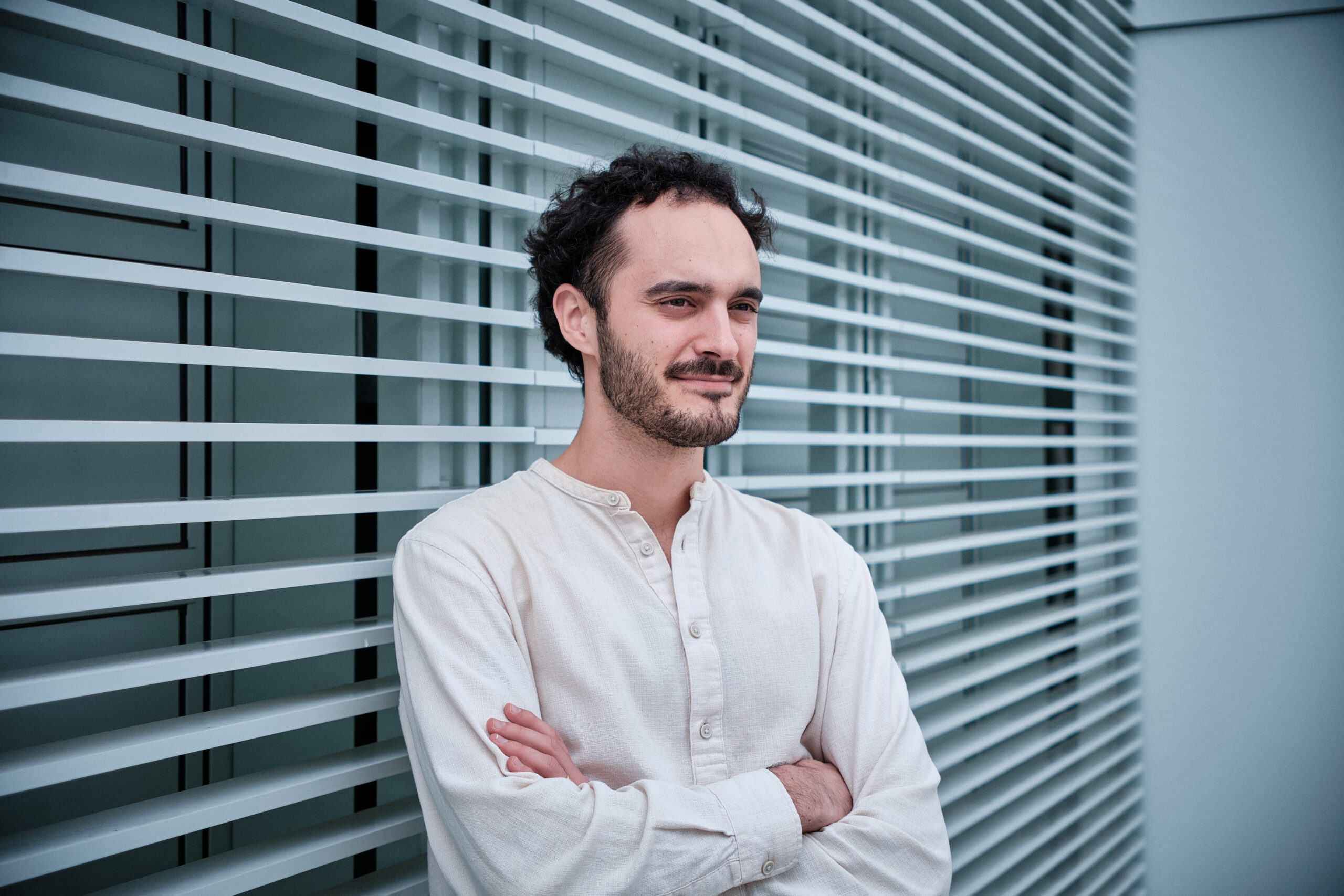
People today tell things to AI systems they might once have shared only with close friends. Many of Miguel Gómez Hernández’ own friends and family members have at times turned to chatbots when facing personal challenges: How can I confidently prepare for an exam? How should I handle a friend’s problem? In doing so, they felt understood by the AI. Observing this worried Gómez and made him interested in how people anticipate and feel about the future of AI and other technologies, also as they get older.
When Gómez imagines his own future, the picture is remarkably clear. His family and friends will remain the most important people, they are at the centre of his life. New technologies will support him in everyday life, helping with things like filing taxes, and assisting him wherever he chooses to let them. But they will not replace human relationships, caregivers, and loved ones. As an anthropologist, he sees these human connections as irreplaceable.
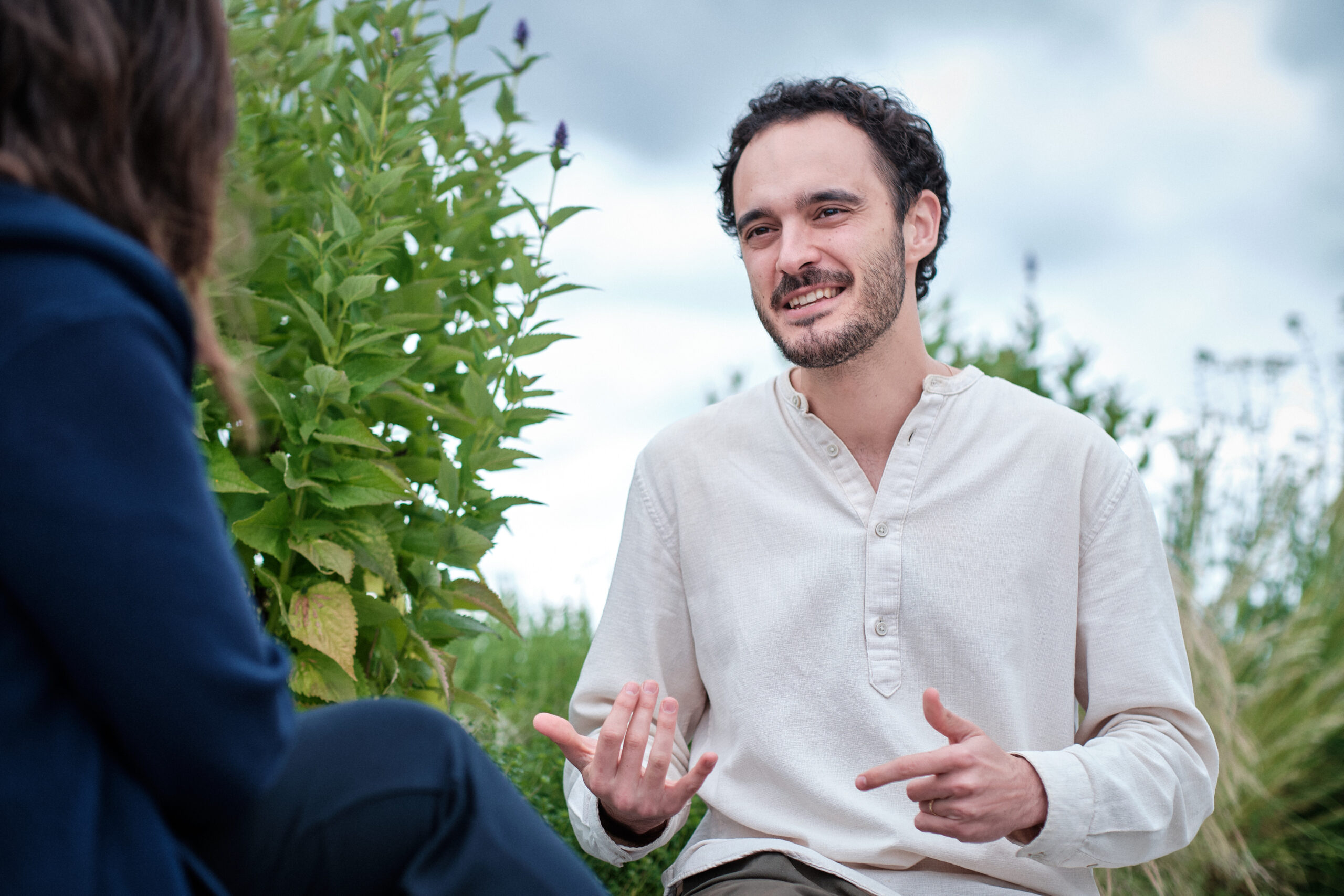
When and how is AI used in everyday life — both at home and at work — and how much do we actually trust it? These are the questions being explored by anthropologist Miguel Gómez Hernández. © PATRICK GERSTORFER / UNIVERSITY OF TÜBINGEN
Research on AI tends to centre on the technology itself, often leaving the human dimension unexamined. Gómez’ interests point in a different direction. His focus lies less on algorithms or systems and more on the people who use them and how they relate to them. “I want to follow people and observe what they actually do with AI and how they relate to it,” he explains. “Do they want it, do they trust it? And how do they imagine the role of AI in their work?”
Elder people are more than a risk score
Gómez’ focus took shape during his PhD, which examined the relationship between older people and technology futures—specifically, how older adults envisioned AI’s future role and other technologies, and how those visions differed from what technology developers expected. His interest in the topic emerged from a troubling observation: older people were often reduced to a number. Much of the technology being developed to help them stay in their own homes wasn’t really designed for them, rather it was designed to minimize risk and cost for the taxpayer and for the peace of family caretakers. Everything around older people was instrumentalized, built around their bodies and health, but rarely around what actually mattered to them. “Do this exercise”, “talk to this avatar so you don’t feel lonely”, “eat healthy”. In Gómez’ view, technology developers are patronizing older people in many ways. “You wouldn’t do that for a younger person,” he says.
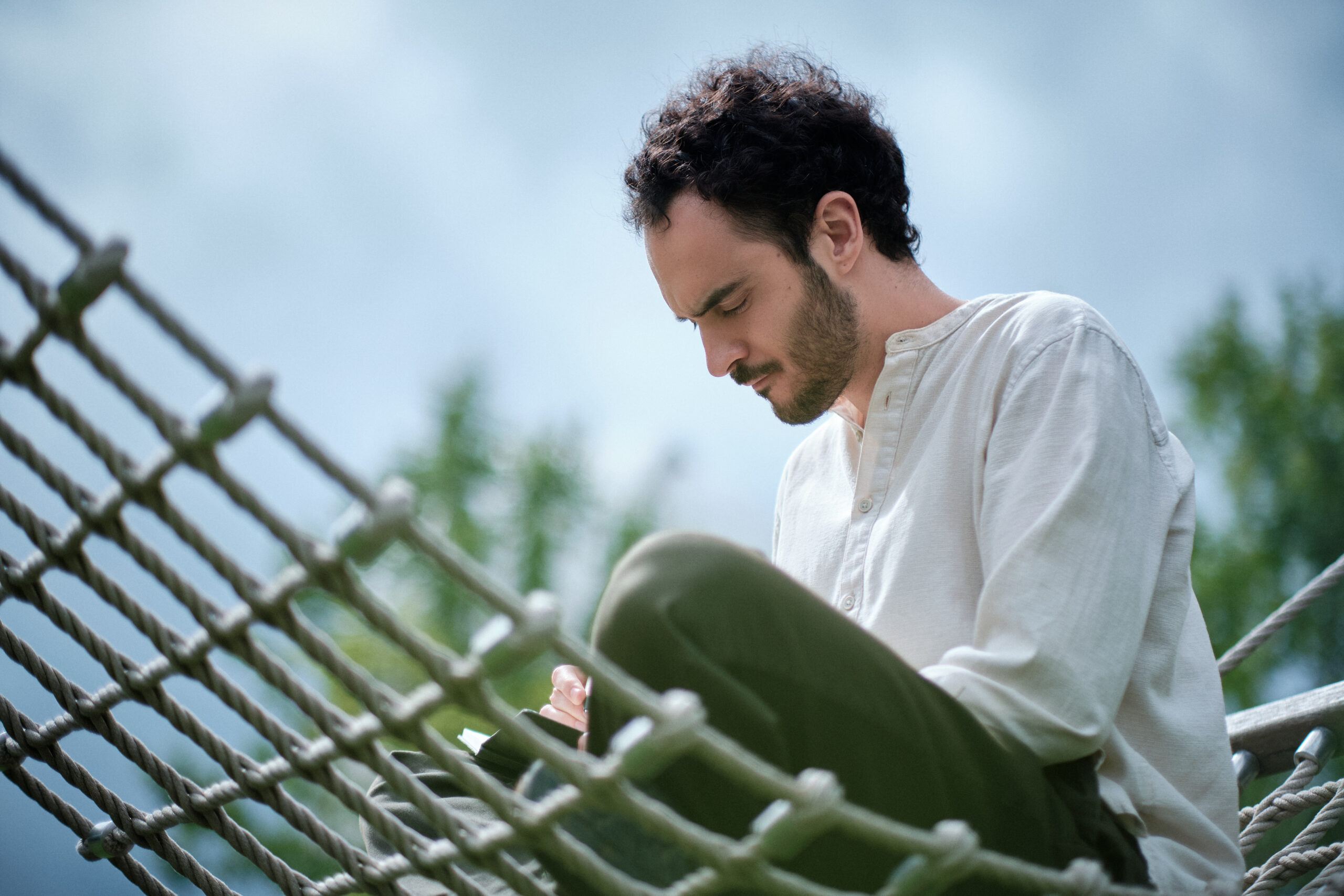
Gómez is interested in the everyday lives of older people in an increasingly technologized world. © PATRICK GERSTORFER / UNIVERSITY OF TÜBINGEN
By shifting his focus to the people who actually have to live with these technologies, Gómez hoped to contribute to an increasingly important field, especially given that our societies keep ageing. “I’m fascinated by how people will respond to technological change,” he says. “Will they resist new applications, use them in unexpected ways, or simply adopt them as intended?” This is also what drew him to the Norms & Practices Lab at the Cluster of Excellence “Machine Learning” in Tübingen where he now explores, from an anthropological perspective, how scientists anticipate the futures of machine learning and how machine learning will change scientific norms in different domains (e.g. health, agriculture, care work, etc.).
Bridging research, policy, and practice
That focus now shapes his current research project at the lab, where he first plans to examine how scientists imagine the future of machine learning: the hopes, anxieties, and risks they associate with it. After that, he plans to research the future of machine learning in applied fields. For example, he is interested in investigating the intersection of agriculture and technology, a domain that has received comparatively little attention within the social sciences studying AI. Agriculture, he points out, has a deeply sensory dimension: farmers touch the land, feel the soil, sense the temperature. It’s an embodied practice. Yet opinions differ on what agriculture actually is, a science, a practice, or something in between. “I think it can be both,” Gómez says. “Farmers practice and create their own science.”
With an ageing society, fewer care workers, and fewer farmers to sustain food production in Europe, challenges lie ahead. Machine learning is often heralded as a solution to these challenges. Yet we don’t know how people imagine these different futures, which makes it harder to be prepared. Gómez wants to inform policymakers about what’s happening on the ground, and to bridge the gap between academic research and practice. Rather than limiting himself to publishing articles, he imagines building a website for his project that documents his fieldwork and conversations through video. He can also picture organizing a workshop that brings real practitioners and scientists together. “Building on the work of other social scientists practicing multimodal research, I’d like to go a little beyond these conventional formats,” he says, “to make my work more accessible and reach more people.”
In Tübingen, Gómez aims to explore how AI is transforming work in research and practice, uncovering new methods and ways of engaging with it along the way. © PATRICK GERSTORFER / UNIVERSITY OF TÜBINGEN
Coming to Tübingen was thus also an opportunity for him to contribute his expertise while investigating how underlying assumptions about the future of technologies can lead AI systems to disadvantage certain groups. Miguel Gómez Hernández is enthusiastic about his new home. He appreciates the historical vibe of the city, its proximity to nature, and the students who give it its vibrant atmosphere. Alongside him, the philosopher Nora Lindemann and the legal scholar Ludovica Paseri will also join the Excellence Cluster’s Norms & Practices Lab. This will create an interdisciplinary research group that brings together technological, ethical, and societal perspectives. “I’m really looking forward to the collaboration,” says Gómez. “And I think that in this context, my anthropological perspective can help ground the research in people’s lives.”
Translation into English: AI was used as a tool for an initial translation, which was then finalized by a professional translator (Fortuna Communication)

Comments