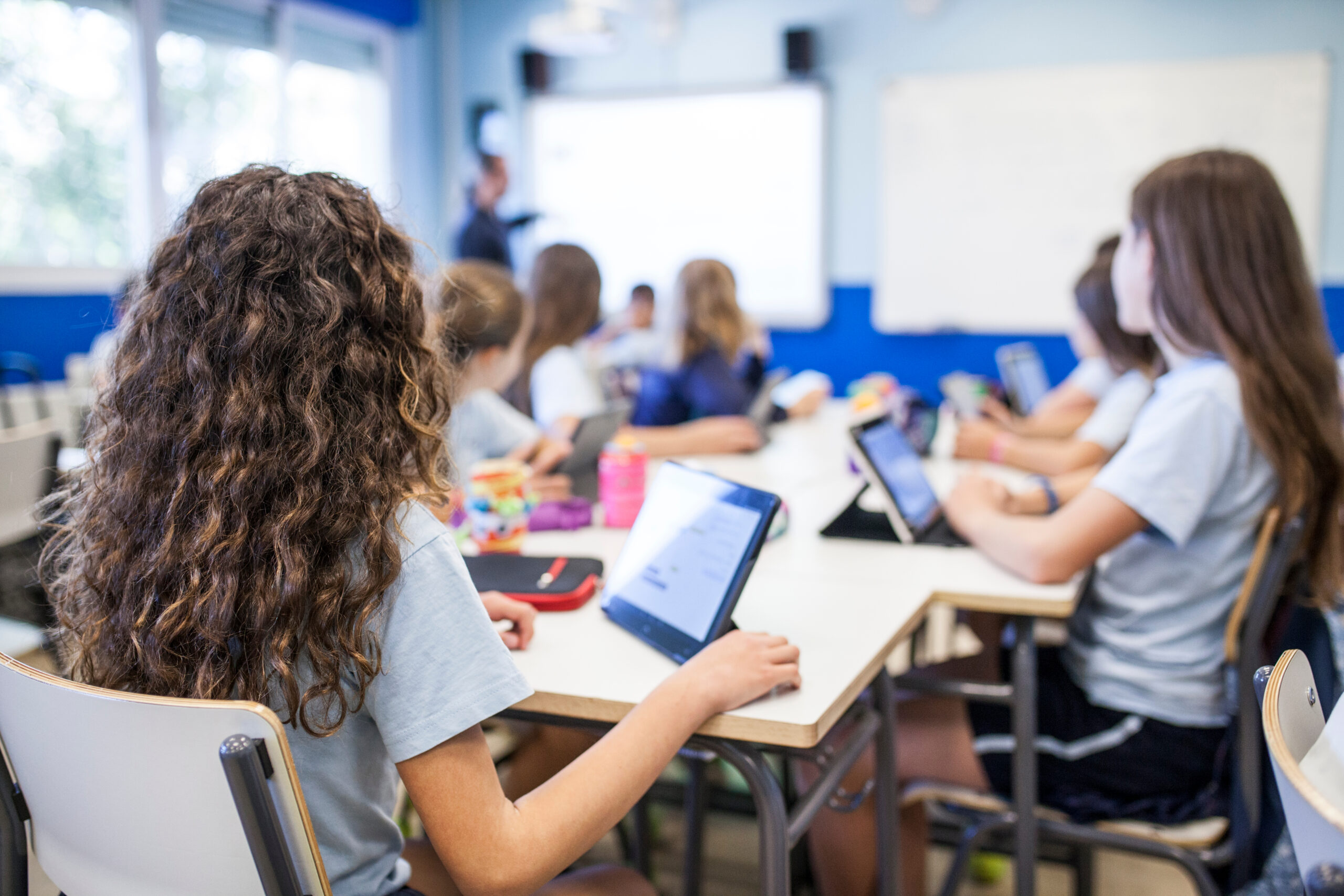
Increasingly, AI tools are being incorporated into teaching and learning processes [1]. That is, in school, a teacher can use an AI-supported tutoring platform to provide individualized exercises and feedback for every student in the classroom within seconds. At home, a student can ask an AI tool to summarize a chapter, solve a mathematics problem or draft an essay introduction before tomorrow’s deadline. On the one hand, such tools may help teachers to adapt instruction and allow students to learn in more personalized and efficient ways. On the other hand, they may also reduce the very cognitive and metacognitive effort that education is meant to cultivate. Education, after all, should nurture the ability to think critically, to judge, to regulate one’s own cognition and motivation, and thus to act with agency [2]. Incorporating AI to improve performance in schools too soon or too clumsily has the potential to undermine learning: when given the opportunity to use AI, students may rely on AI solutions instead of investing effort in understanding the material. This behaviour promotes the risk of AI dependency. In our view, AI in education may help students to accelerate performance, but — more importantly — it must foster learners’ ability to think, self-regulate and act with agency.
At the heart of agency lies self-regulation [2]. Self-regulation is the capacity to pursue goals by deliberately managing one’s own cognition, behaviours, motivations and emotions [3]. Strong self-regulation is associated with a wide range of positive outcomes (including academic success and wellbeing), whereas weak self-regulation is linked to problematic learning and life trajectories [4]. In education, this capacity is prominently reflected in self-regulated learning, in which learners plan, execute, monitor and evaluate their learning activities and adapt their approach when difficulties arise.
Undermining Human Agency
Imagine a student working with an AI learning system that instantly simplifies difficult concepts, provides step-by-step solutions, and continuously adapts tasks to avoid frustration or failure. Learning may start to feel effortless and highly efficient, and indeed student performance could improve. However, when students rarely need to struggle with uncertainty, persist through difficulty, or develop the ability to regulate their own learning processes, schools unintentionally reduce opportunities to develop the very human agency that education is meant to develop [2].
Educators and psychologists know that developing students’ competence takes time, effort and reflection, but AI can undermine these important experiences. When learners outsource planning, execution, monitoring, evaluation and revision to a tool, they reduce cognitive effort in the short term. In some cases, that is useful. However, more often, it means outsourcing the very processes that underlie deep learning. Experimental evidence already suggests that students using large language models for information search often develop a shallower understanding than peers using conventional web search, because the models free learners from the work of reviewing, filtering and integrating multiple sources [5]. These kinds of ‘desirable difficulties’ exemplify the deep information-processing activities required to build elaborated knowledge structures. Other studies suggest that AI-supported task completion can coincide with reduced metacognitive engagement and weaker knowledge gains, even when the finished product looks better [1, 6].
These concerns are no longer hypothetical. AI is already being used by students, often beyond direct teacher supervision, and the initial evidence base is converging on a crucial distinction: better performance with AI does not mean better learning [1, 7]. In some settings, general-purpose AI tools improve the apparent quality of student work while leaving the underlying knowledge unchanged — or even weakened once the tool is removed [1, 7, 8]. This is not a minor design or implementation problem. It is a major warning sign that educational systems that incorporate AI as a tool that substitutes for learning processes, rather than supporting them, may reward polished products while neglecting the development of durable competence. Mindless incorporation of AI also makes it more difficult to assess learning: the products submitted by students who exert agency, self-regulate and complete tasks by themselves become indistinguishable from those submitted by students who offload such production to the AI and forego the opportunity to develop competence.
Strengthening self-regulated Learning
Therefore, educators and policymakers face a choice. They can incorporate AI as a shortcut or implement it in ways that will strengthen learners’ agency and capacity for self-regulated learning. We suggest that this choice can be clarified by distinguishing three broad scenarios (Table 1).
In the first, AI functions as a service provider. For example, learners ask AI to generate an essay, summarize a text, solve a homework problem or provide a direct answer to a question, and the AI produces the requested output. This is dangerous in education because it can undermine novices’ learning, both in terms of the content novices should be learning and the agency they should be developing. In our experience, this is today’s default mode for AI. It can immediately raise performance levels, but for novices it also creates the risk of skill skipping: competencies are never built because the learner does not have to acquire or exercise them. For more advanced learners, it can lead to de-skilling: abilities that once existed suffer from atrophy due to disuse. In both cases, the learner becomes increasingly dependent on external intelligence rather than more capable because of it.
In the second scenario, AI functions as a teaching assistant. For example, a learner asks why a mathematical solution is incorrect or how a scientific concept works, and the AI provides explanations, hints, feedback and step-by-step guidance tailored to the learner’s needs. Here, the system does more than just deliver answers: it guides practice, provides explanations and adapts instruction to individual learners’ needs. This is a genuine step forward, and decades of work on intelligent tutoring systems show the potential of such support systems. They support the learning of specific content through guided activities but do not typically build the learner’s capacity to independently regulate their future learning.
In the third scenario, AI functions as a learning coach. For example, a learner discusses learning goals, difficulties or motivational challenges with AI, and the AI prompts reflection, suggests learning strategies, and supports planning, monitoring and evaluation of the learning process. This is the scenario that educators and policymakers should prioritize. A learning coach does not simply help students to understand the content and finish the assignment at hand. It helps them to understand the principles for setting goals, choosing strategies, monitoring comprehension, managing motivation, coping with frustration and reflecting on what worked in a specific content domain. In other words, AI as a learning coach would make self-regulated learning a learning objective in its own right, and this objective could be made transparent to the student [9]. The aim is not just better task completion today, but stronger human competence tomorrow. More recent hybrid human–AI systems aim to support self-regulated learning while preserving some learner control [9]. Yet even these approaches often focus primarily on helping students to succeed in the current task only (that is, AI as a teaching assistant).
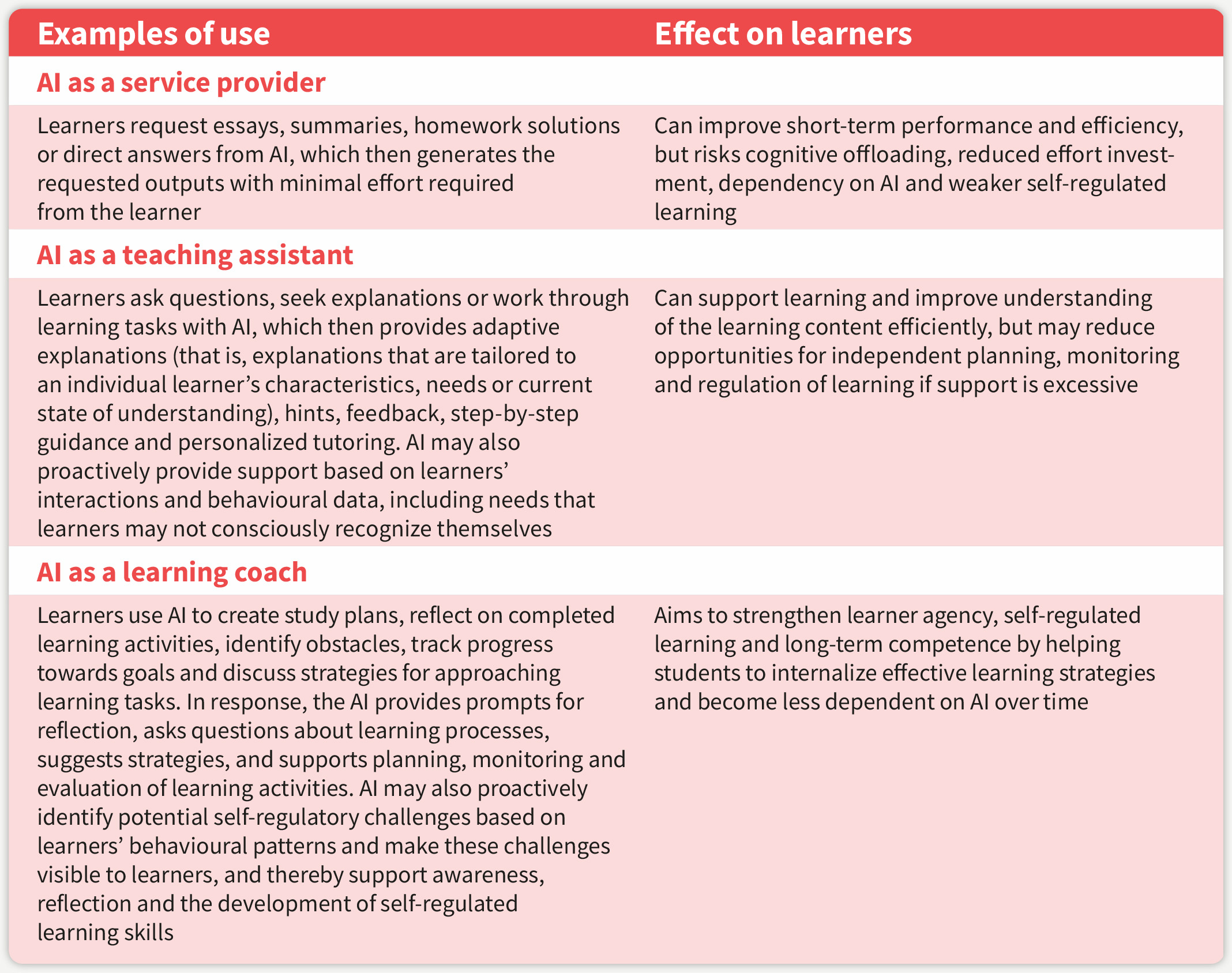
Table 1: AI tools in education and their effect on learners
The distinctions between the three scenarios matter because self-regulated learning is not an optional enrichment skill. It is a foundational capacity for lifelong learning, academic success, mental health and participation in modern societies. In an AI-rich world, it becomes even more important. Citizens will increasingly need to decide when to trust machine outputs, when to question them, when to seek alternative evidence and when to persist through difficulty rather than delegate it. A school system that teaches students to work with AI, but not to think through and beyond it, risks producing high-output, low-agency learners who eventually become low-agency citizens. Moreover, emerging evidence suggests that AI systems may mirror the quality of their usage: users who formulate clear, goal-directed and strategically structured prompts generally receive more sophisticated and useful responses, which implies that cognitive and metacognitive skills may become increasingly important for benefiting effectively from AI-supported learning.
Becoming better Thinkers
The good news is that AI could help to build up the very capacities it now threatens to bypass. Hybrid human–AI regulation frameworks already point in this direction by emphasizing calibrated transfers of agency from system to learner [9]. Recent classroom evidence also suggests that AI can support self-regulated learning when it is intentionally designed to prompt motivational reflection and strategy use rather than simply provide solutions [10]. The design principle should be clear: educational AI should progressively return agency to learners. It should make strategies visible, model good judgment, prompt self-explanation, encourage delayed answering and help students to notice when they are relying on the tool rather than thinking.
This requires a shift in policy, design and evaluation. In Box 1, we provide our key recommendations for educational stakeholders.
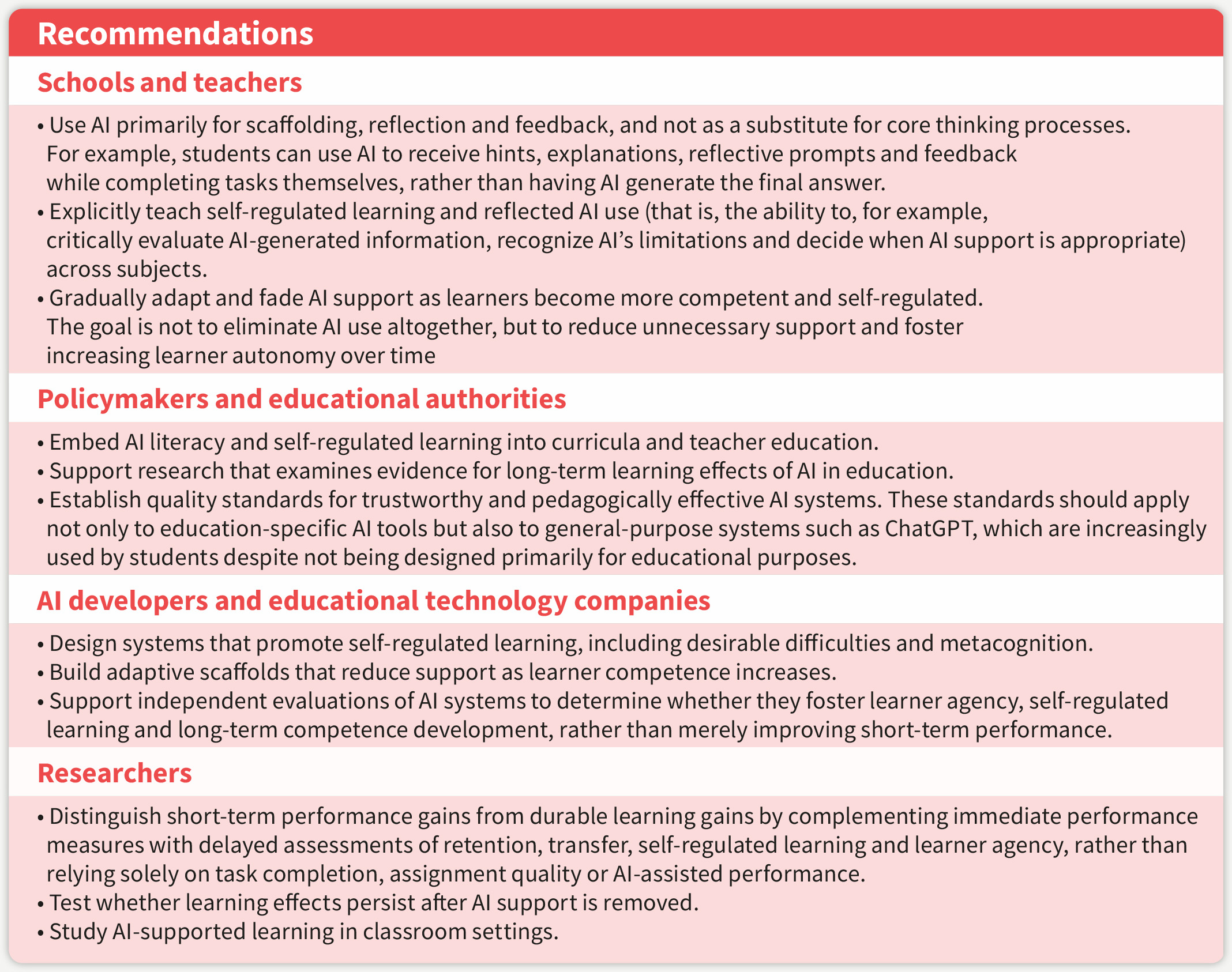
Box1: Our recommendations for educational stakeholders using AI tools
The deepest promise of AI in education is not that it can help students to perform faster. It is that, if designed wisely, it can help students to become better thinkers. This requires moving beyond AI as a mere service provider that delivers answers or as a teaching assistant that helps students to learn content efficiently towards AI as a learning coach that supports learners’ thinking, self-regulation and agency.
Our goal should not be an education system marked by the increasing use of machines to produce answers. It should be an education system that uses AI to cultivate self-regulated, intellectually sovereign learners — people who have developed their agency so that they can still ask good questions, sustain effort, overcome difficulties and make sound judgments when the machine is gone.
[1] OECD. OECD Digital Education Outlook 2026: Exploring Effective Uses of Generative AI in Education (OECD Publishing, 2026).
[2] Brod, G. Learn. Individ. Differ. 125, 102841 (2026).
[3] Greene, J. et al. in Handbook of Educational Psychology (eds Schutz, P. A. & Muis, K. R.)
314–334 (Routledge, 2023).
[4] Moffitt, T. E. et al. Proc. Natl Acad. Sci. USA 108, 2693–2698 (2011).
[5] Melumad, S. & Yun, J. H. PNAS Nexus 4, pgaf316 (2025).
[6] Fan, Y. et al. Br. J. Educ. Technol. 56, 489–530 (2025).
[7] Yan, L., Greiff, S., Lodge, J. M. & Gašević, D. Nat. Rev. Psychol. 4, 435–436 (2025).
[8] Liu, G., Christian, B., Dumbalska, T., Bakker, M. A. & Dubey, R. Preprint at https://doi.
org/10.48550/ARXIV.2604.04721 (2026).
[9] Molenaar, I. Comput. Educ. Artif. Intell. 3, 100070 (2022).
[10] Fütterer, T., Bardach, L., Kuhn, J., Keller, S. D. & Gerjets, P. Educ. Psychol. Rev. 38, 42 (2026).
Article (originally published by Nature Human Behaviour on July 13, 2026):
Fütterer, T., Gerjets, P., Steinhäuser, R. et al. Why using AI as a learning coach can improve education. Nat Hum Behav (2026). https://doi.org/10.1038/s41562-026-02524-2
Reprinted by permission from Springer Nature

Follow the People, not Technology

Alumni Spotlight: Jakob Schlör Shapes the Next Generation of Weather Forecasting


Comments